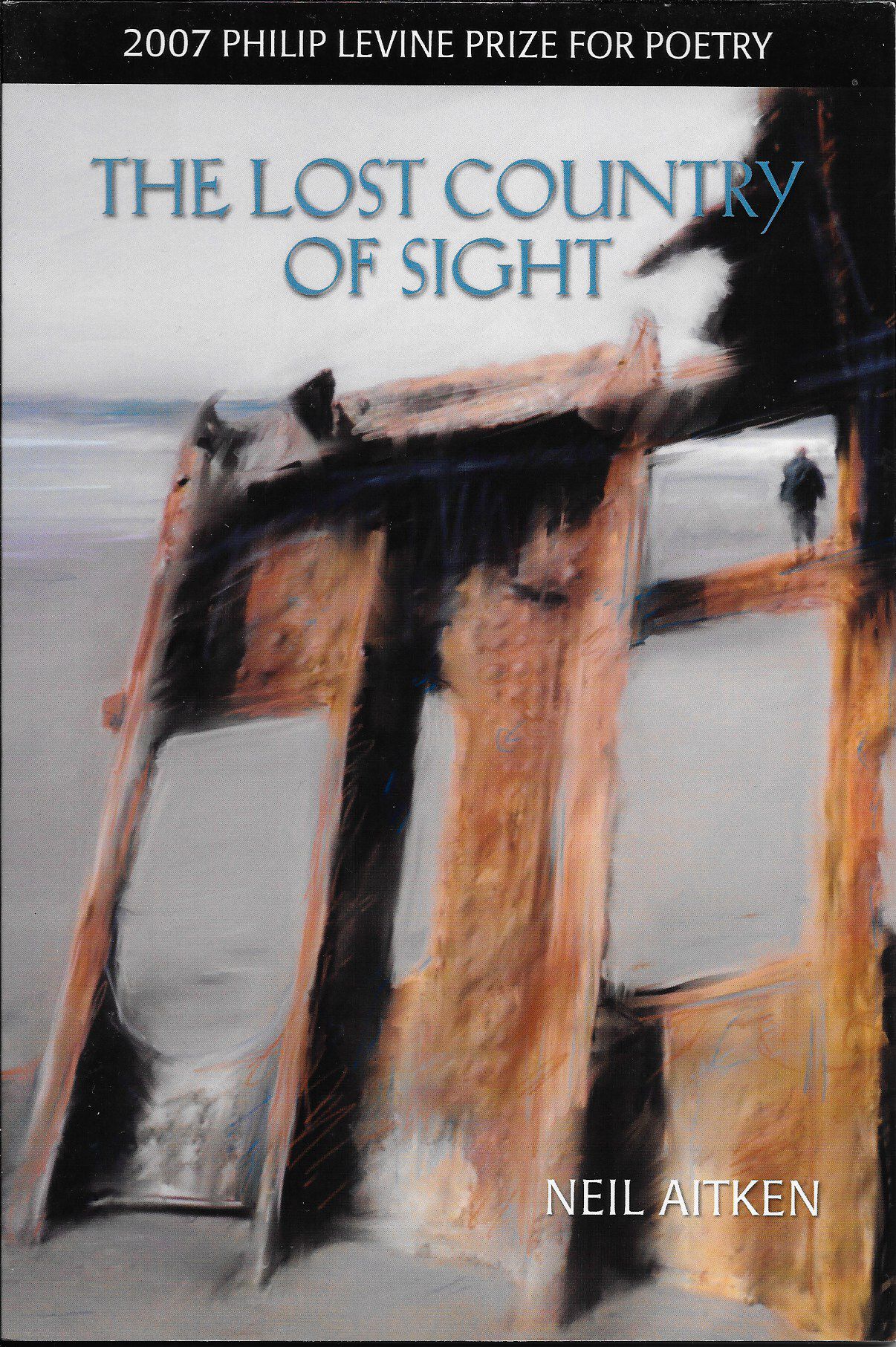
Revolving around the themes of exile and return, memory and forgetting, and the reconstruction of home through the written word, The Lost Country of Sight
navigates a path through loss and separation that spans Canada, the United States, and Taiwan; the death of a father; and a life lived in the liminal space between
cultures and languages.
It’s difficult to believe that Neil Aitken's
The Lost Country of Sight is a first book, since there is mastery throughout the collection. His ear is finely
tuned, and his capacity for lyricism seems almost boundless. What stands out everywhere in the poems is his imagery, which is not only visually precise but is also
possessed of a pure depth. The poems never veer off into the sensational; they are built from pensiveness and quietude and an affection for the world. “Traveling
Through the Prairies, I Think of My Father's Voice” strikes me as a perfectly made poem, but poems of similar grace and power are to be found throughout the book.
This is a debut to celebrate.
—C.G. Hanzlicek, 2007 Philip Levine Prize Judge
The voice in these poems is that of a sighted, awake heart discovering its home in language and its homelessness in the world. Steeped in longing,
the imagination here is concrete, vivid, sensuous, and ultimately erotic, even as it perceives that meaning and beauty are evanescent.
—Li-Young Lee
Fueled by motion and emotion, Neil Aitken's
The Lost Country of Sight is literally and figuratively a moving collection. His winding roads and
“ghost cars” move us over the landscapes of identity and personal history with stirring meditative grace. “There is a song at the beginning of every journey”
Aitken tells us in one poem even as he says in another, “these are journeys we never take.” This poet is our both our wise, wide-eyed tour guide and our dazed,
day-dreaming companion in
The Lost Country of Sight. This is a rich, mature debut.
—Terrance Hayes